
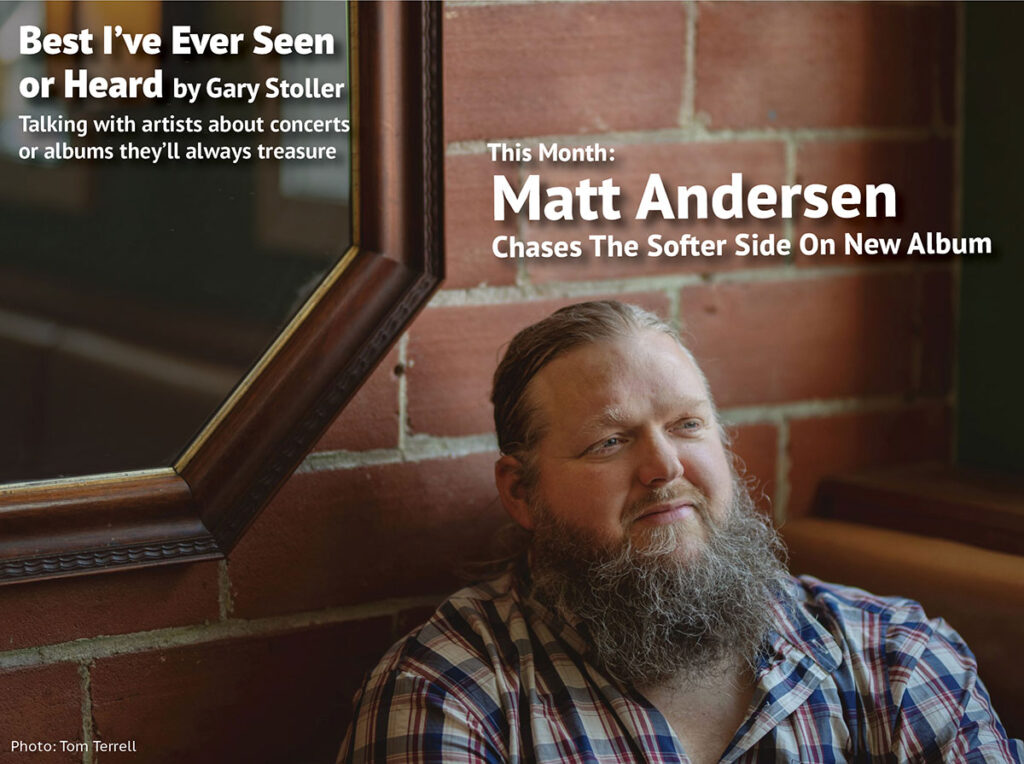
For decades, Canada’s Blue Rodeo has been a big concert act in their home country, and, every summer, the group plays a huge outdoor show in an amphitheater that holds more than 16,000 concertgoers on the grounds of Ontario Place in Toronto. Ten years ago, relatively unknown Canadian singer-songwriter Matt Andersen strode out on the amphitheater stage as the warmup act and let loose his booming voice.
Andersen’s expressive, powerful vocals were mesmerizing, and I noticed something off stage on the right that one rarely sees. Jim Cuddy, who with Greg Keelor leads Blue Rodeo, stood and watched Matt perform, apparently very impressed.
“I remember the feeling of, ‘How did I end up here,’ playing on the same stage as my heroes,” Andersen tells me today after recently releasing his new album The Hammer & the Rose. “Standing side-stage and watching them do their thing was a moment that stuck with me. I saw how the crowd sang along to all their songs.”
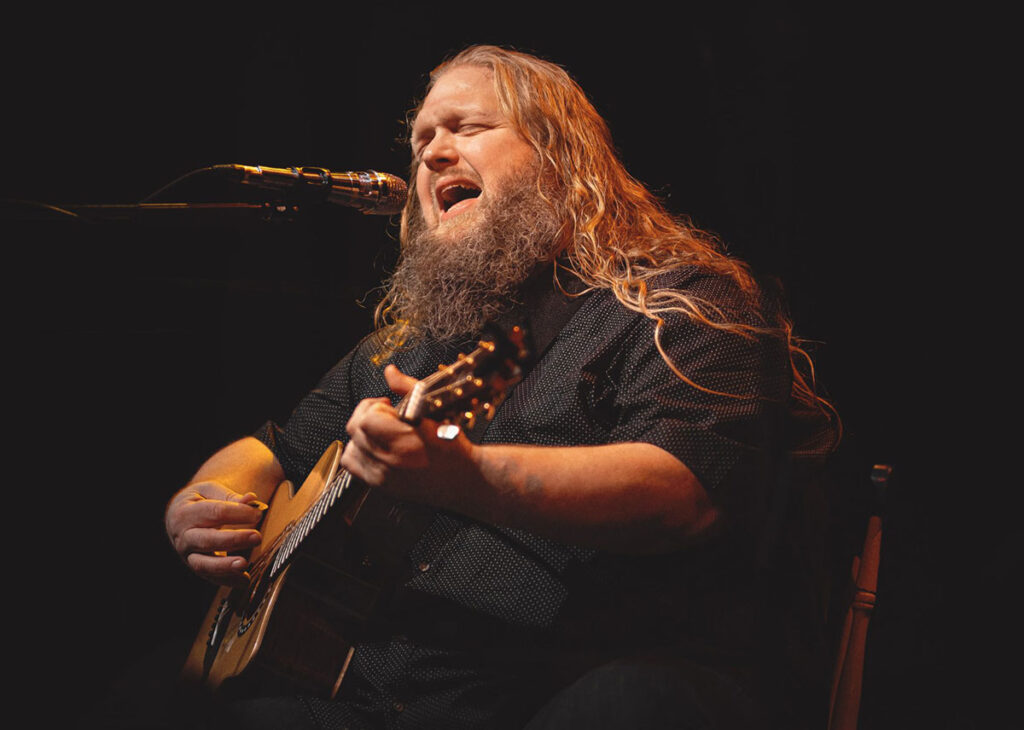
Andersen’s musical trademark is his deep, commanding voice that can melt the audience as he adeptly shifts from highs to lows. He once described himself as singer first, a guitarist second and songwriter third.
I ask him how he describes his voice and its range.
“On my best days. I can get about 3 1/2 octaves, with three of those pleasant to listen to,” says Andersen, a New Brunswick native who now lives in Nova Scotia. “My voice is low enough to kick in the subs (subwoofers) of a PA (public address system) and high enough to make a dog tilt its head.”
His voice is “a result of the influences I listened to and sang through the years, combined with having to get over the drunk chatter in the pubs,” he adds. “The music I lean to the most is heavily influenced by blues and gospel and the classic rock, country and folk music I love.”
The Hammer and the Rose is Andersen’s 11th album. I ask him how the album differs from others in his catalog.
“This is the first album I have gone into with a very specific idea of the sound we were going for,” he answers. “My usual approach is to head into the studio and let the energy of the moment steer the vibe of the recording.
With this album, producer Josh (Van Tassel) and I had several conversations about what the end goal was. We wanted an album that focused more on restraint than on abandon. Really chase the softer side of what I do. It was our attempt to lure listeners in.”
The album was recorded last fall at Andersen’s home studio, which once was an old workshop.
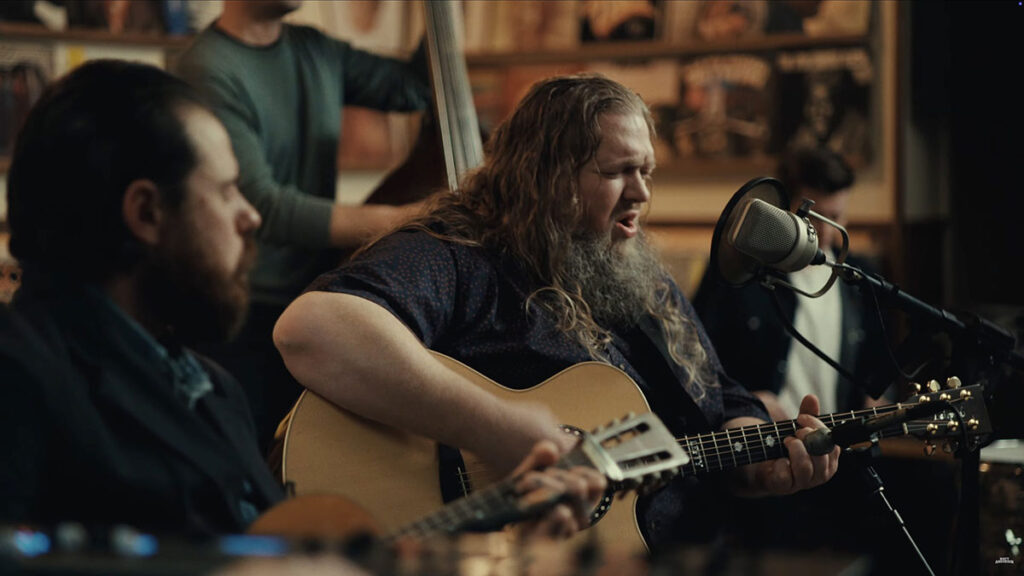
“We recorded live off the floor, meaning we all played at the same time,” Andersen says. “We recorded with no headphones — all sitting as close as we could and playing nice and soft. It was a beautiful way to record. Just about as organic as it could be. If we wanted to hear more organ, we just opened the door to the room where the speaker was.”
Cooking was also a big part of the process.
“The ability to wake up at home, throw on my slippers and stroll across the dooryard to the studio was the best combination of feeling at home and heading in to work,” Andersen says. “Aside from music, cooking is something that brings me a great deal of calm. Every morning, I would wake up in time to make a lunch for the day — chicken stew, chili, those sorts of things. Simple and comforting. I learned early on from producer Colin Linden that family meal time is an important part of the recording process.”
The Hammer & the Rose includes a cover of J.J. Cale’s classic song “Magnolia” from his 1971 debut album Naturally. Like Cale’s original vocal, Andersen sings the song slowly and softly.
The singers Andersen finds most enjoyable are those “who sing to suit the song,” he says. “Like any other instrument, the voice has so many different tones and timbres. The best of the voices slide effortlessly through them all. A great example is Lorraine Ellison singing ‘Stay with Me.’ She starts off with such a supple and soft delivery, then the chorus kicks in, and she just peels it. Chills me every time on that one. That’s the voice I chase.”
Now that Andersen has strayed to the theme of this column, I ask him who is the best singer he ever heard.
“That’s a hard question to answer, because so many factors make up what a singer is,” he answers. “There is so much to consider on the technical and emotional side of singing. You can have an astounding technical singer who lacks the emotion to really pull you in. The flip side are singers who might not hit all the notes, but you get chills every time they open their mouth.”
Andersen then mentions one of his favorite singers: John Fogerty of Creedence Clearwater Revival fame. Andersen covers several Creedence songs on stage, including “Susie Q” and “Lodi,” and I watched him do a killer version of “Long As I Can See the Light” 10 years ago in Ridgefield, Connecticut.
“I don’t know that he’s the best I’ve ever heard,” Andersen says, “but, if I could steal a voice, it’d be his. Such delivery. ‘Wrote a Song for Everyone’ is him at his best. He lands right at the magic point between storyteller and singer, poet and preacher.”
Andersen has another favorite — a voice concertgoers haven’t heard.
“Aside from Fogerty, my mum,” he says. “I’m not going to explain that one. For me, it’s as comforting as a slice of her homemade bread.”
Andersen says it’s also difficult to pin down the best concert he has attended. He has been a long-time fan of the alt-rock Tragically Hip, one of Canada’s most beloved bands, and their songs were the first he learned to play when he first picked up a guitar.
“Through the years, I was just never able to make it to a Hip concert,” he explains. “Truthfully, it felt like they would always be coming through again, and I would have endless opportunities to catch them live. When the news came that Gord Downie was sick, and they would be heading out on one last tour, I made sure I caught them. The only date that made sense was in Vancouver, the other side of the country from where I live. My seat was 14 rows back and just to the right of center stage.
“It was like watching somebody perform my life for me,” Andersen continues. “I could tie so many memories to their songs. The band was on fire, and Gord gave us all he could. I don’t use the term lightly — it was absolute magic. The vibe in the room was so positive — like we were all watching the home team win. The applause at the end of the show for Gord wasn’t a request for more, but a thank you for all he and the band had given us over the years. I don’t know that I’ll ever feel that at a show again.”
Many American music fans may be unfamiliar with Downie, who died in October 2017 at age 53 after a battle with brain cancer. Downie, a singer-songwriter, poet and activist, was the frontman of the Tragically Hip.
Canada has bred so many great musicians, but Andersen says the Tragically Hip is No. 1 in his book. The Hip’s “Road Apples” was one of the first albums he bought with his own money.
“I remember feeling like such a bad ass buying a rock album,” he recalls. “Without trying, they felt like Canada’s band.”
Andersen’s other Canadian favorites include Stan Rogers — “the songwriting was such an inspiration” — as well as Penny Lang and Morgan Davis.
“I got to hang and play with Penny at a few festivals over the years,” Andersen notes. “Just the best vibes from her on and off the stage. I would watch Morgan every Thursday night that I could at Bearly’s House of Blues when I first moved to Halifax. It was like a free guitar workshop with beer. And Morgan is just the coolest.”
Naming favorite Canadian musicians is challenging, because many Andersen admired are now friends.
“I could write a hundred names of people who have inspired me over the years,” he remarks.
Andersen’s all-time favorite album comes as a surprise: raspy-voiced Rod Stewart’s Every Picture Tells A Story.
“I love the interludes between the songs,” he explains. “The playing is raw and full of emotion. Rod is singing his arse off. The imperfections that pop up make the whole thing feel perfect. I can listen to it top to bottom and not want to skip a second of it. It’s a feel that I chase anytime I head into the studio. Make it about the music, not the people performing it.”