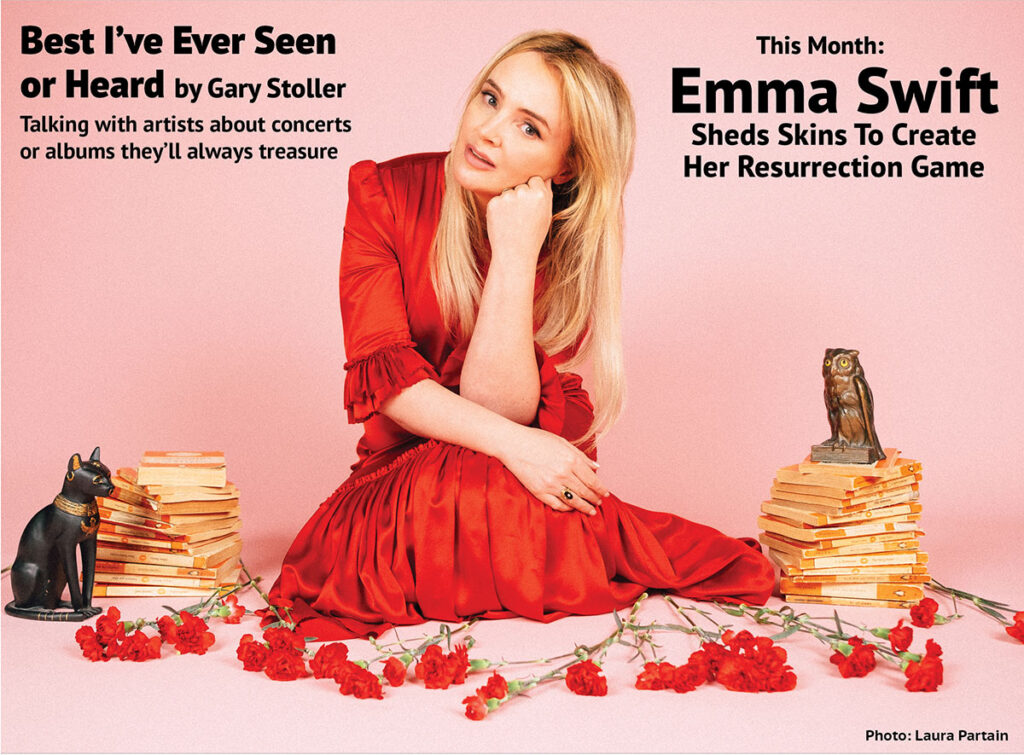
Emma Swift had lots of aims when she went into the studio to record her new album The Resurrection Game. All those aims may have come together to produce a unique, quite special album that’s emotional, exciting, revealing, rocking and mysterious.
“I wanted to make a deeply personal, confessional, old-fashioned album,” she tells me. “I wrote the songs folk-style on my guitar, but it was always my intention to create something more cinematic. I’ve always loved the luscious string arrangements on albums from the 1960s and 1970s: Scott Walker, Nick Drake, Judee Sill, Dusty Springfield, that kind of stuff. My producer, Jordan Lehning, and I are also movie buffs and adore the films of David Lynch, and the scores written by his composer Angelo Badalamenti. So, we worked toward making an album that, although it doesn’t sound retro per se, has an indie folk meets orchestral sound.”
But what needed to come to life for such a title, The Resurrection Game?
“It’s about putting yourself back together after life-altering circumstances,” responds Swift, an Australian songwriter living in Nashville. “It’s about ego death. It’s about shedding skins.”
Swift went through some difficult times prior to the album.
“The seeds of The Resurrection Game were sown on the heels of a seven-week nervous breakdown,” her website explains. “Over a year of recovery followed, a very fragile period in which she grappled with what had happened through therapy, medication and, eventually, her art.”
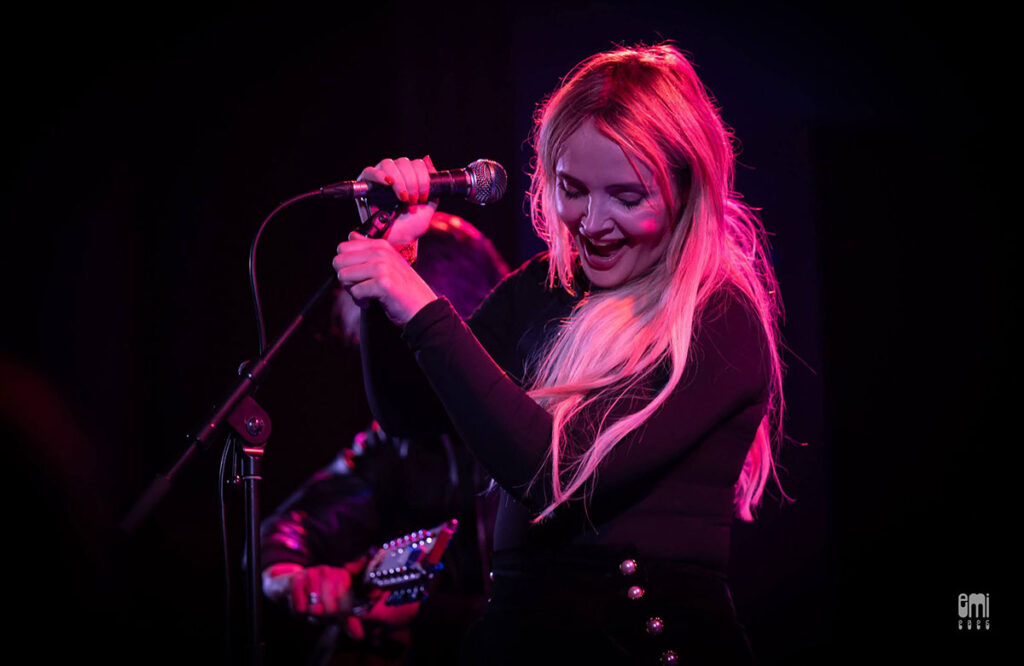
Swift is “a big believer in the redemptive power of art,” she writes on the website. “Though many of these songs come from a an immensely difficult time in my life, what I’m trying to do here is to alchemize the experience. To make the brutal become beautiful.”
The album’s lyrics point out that relationships lead to unhappiness.
“I wrote a lot of love songs for this album,” she responds to me. “It was intentional. I had come out of a difficult time in my life, where quite a lot fell to pieces, but, somehow, my marriage survived, and a lot of my friendships did, too.”
Swift is married to Robyn Hitchcock, the British singer-songwriter who, among many other works, recorded Storefront Hitchcock, the soundtrack for a Jonathan Demme movie.
In her song “No Happy Endings,” Swift sings:
I’ve come up for air
After years underground
Still got the taste
Of dirt in my mouth
Delicate, delicate as a skeleton
Holding a jar of flowers
And just like those flowers
I am wild and I’m blue
I’ve come back for the spring
And I’ve come back for you
But everything, everything changes
Maybe you have too
The world’s a spinning time bomb
That there’s no denying
There are no happy endings
But baby I’m tryin
“This song is essentially saying I’m a bit of a mess, but I’m trying to make the best of it,” Swift explains to me. “The refrain is ‘there are no happy endings, but baby, I’m trying,’ which is to say, we’ve all got a limited time on the planet. We all die. But while we’re here, I’m doing the best I can.”
Two songs, “Going Where the Lonely Go” and “How to be Small” seem to cry out for someone to understand the depth and loneliness of Emma Swift.
“Going Where the Lonely Go,” though, “isn’t about loneliness,” Swift says. “It’s about desire and sex, and human connection. We’re born alone, and we die alone, but we’re drawn to each other, because of fate or pheromones or both, and that’s what keeps the species species going. ‘How To Be Small’ is about the loneliness of loving someone who doesn’t love you back. I don’t think there’s a way out of that feeling, except to endure it, and to, hopefully, eventually, find a safe place somewhere else for your love to land.”
In 2020, Swift released her first full-length album, Blonde on the Tracks, a truly beautiful album covering Bob Dylan’s songs. Rolling Stone cited Swift’s version of “Queen Jane Approximately” as No. 17 in its list of the 80 best Dylan covers.
I ask Swift why she chose a Dylan covers album for her recording debut.
“I had recorded two EPs before this album, so Blonde on the Tracks wasn’t my recording debut,” she responds. “But it was my first full-length LP. It came about, because I had writer’s block, and I wanted to make an album. But I didn’t have any of my own songs. I landed on Bob Dylan, because he’s my favorite songwriter, and I wanted to see how those songs sounded when I sang them.”
Besides “Queen Jane Approximately,” every song on the album is a gem, and all are true to Dylan’s original version. Swift does a lovely 12-minute cover of Dylan’s epic “Sad-Eyed Lady of the Lowlands” from his 1966 masterpiece Blonde on Blonde. From that album, she also does a compelling version of “One of Us Must Know (Sooner or Later).” And she jumps to the modern era with a great version of “I Contain Multitudes” from Dylan’s 2020 album Rough and Rowdy Ways.
Was there an overall aim when heading into the studio to record Dylan songs?
“I didn’t go into the studio with a big goal,” Swift answers. “I just wanted to get the songs down. There’s a special kind of magic to recording, and I try not to mess with that energy by weighing it down with expectations.”
I mention to Swift that I have lost count but have attended 50-80 Dylan concerts and heard many incredible covers of Dylan songs, including ones I consider better than his originals. Yet, by simply hearing Swift’s first three cuts of Blonde on the Tracks, I was immediately blown away and mesmerized, making me wonder what Dylan and his music mean to her.
“I’m not sure if I can answer what Bob Dylan and his music mean to me,” she responds. “It’s like asking, ‘Why do you like the sun?’ Or, ‘How grateful are you for water?’”
Swift believes Blonde on Blonde’s “Visions of Johanna,” which she didn’t cover on her album, is the best song Dylan ever wrote and her favorite.
“It’s an other-worldly incantation,” she explains. “I think it redefined what could be said in a song. I love it.”
Swift says she cannot choose the best album she has ever listened to but offers “some contemporary albums I’m really digging”: MJ Lenderman’s Manning Fireworks, Father John Misty’s Mahashmashana and Hand Habits’ Blue Reminder.
She then cites “a revolving set of favorite albums.” They are:
Bill Callahan’s (Smog’s) A River Ain’t Too Much to Love
Marianne Faithfull’s Rich Kid Blues
Neil Young’s On the Beach
Bob Dylan’s Infidels
Ella Fitzgerald’s Ella Sings the Gershwin Songbook
Nick Cave and the Bad Seeds’ No More Shall We Part
Gillian Welch’s Revelator
The Silver Jews’ Lookout Mountain, Lookout Sea
Roxy Music’s For Your Pleasure
The Smiths’ Strangeways Here We Come
Beck’s Seachange
The Sundays’ Reading, Writing, and Arithmetic
Elvis Costello’s Imperial Bedroom
Robyn Hitchcock’s Eye

Hitchcock has had an impressive recording career, starting with the Soft Boys in 1979 and continuing through today with numerous solo projects and bands. Like his wife Swift, he was influenced by Dylan and, in 2002, released Robyn Sings, a double album of Dylan covers.
So, I ask Swift if Hitchcock’s love for Dylan helped shape her Blonde on the Tracks album and how he has impacted her music overall.
“Robyn’s a brilliant songwriter and a chaotic, lovable personality to be around,” she says. “I adore him. He’s a helpful sounding board, but, artistically, I make my own choices. We have similar music tastes, but we’re not always in cahoots. Where he speaks fluent Syd Barrett, I am much more into Neil Young. We both like 1960s folk, but he’s into Martin Carthy, and I’m into Sandy Denny. I don’t think his influence on the Dylan album is as important as his influence on showing me how to live a creative life. He’s an art for art’s sake person, which is a tremendous way to be.”
Another singer-songwriter, Martha Wainwright, the daughter of Loudon Wainwright and Kate McGarrigle, had a big influence on Swift.
“I think seeing Martha Wainwright in a small club in Sydney in the mid-2000s was hugely influential in making me want to go out and sing songs,” Swift says. “I like her passionate intensity — the folk-chanteuse thing. It’s very appealing to me.”