
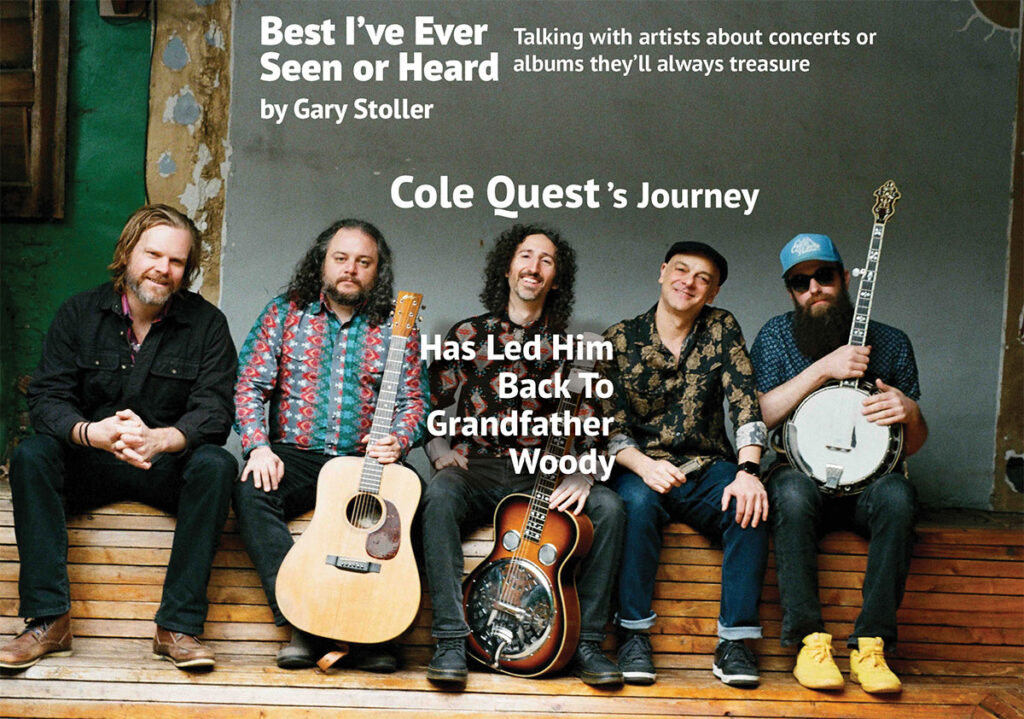
Cole Quest performed four times at WoodyFest, the annual celebration honoring his grandfather Woody Guthrie in Okemah, Oklahoma. During one visit to the small city where Woody was raised, he brought his band along on a search to find the home where his grandfather once lived.
“I didn’t remember exactly where it was, because I had only been there when my mother took me as a child,” Quest tells me. “I was going strictly off a vague memory. We were wandering around some neighborhoods when a man came outside and asked if we needed help. I confessed that we were looking for the remains of Woody’s home. He lit up with excitement and brought us right to the spot. Although totally covered in weeds, the man peeled back some bushes that revealed a small pile of bricks which resembled what used to be a foundation of the home.”
The man then related several stories about the history of the location and Guthrie’s childhood home. Guthrie was born in Okemah on July 14, 1912.
“It was wonderful to feel there was still a group of local people who took pride in Woody’s memory so many years later, especially given the politics of the area in contrast to those of Woody,” says Quest, who performed at the WoodyFest in 2018, 2019, 2021 and 2023.
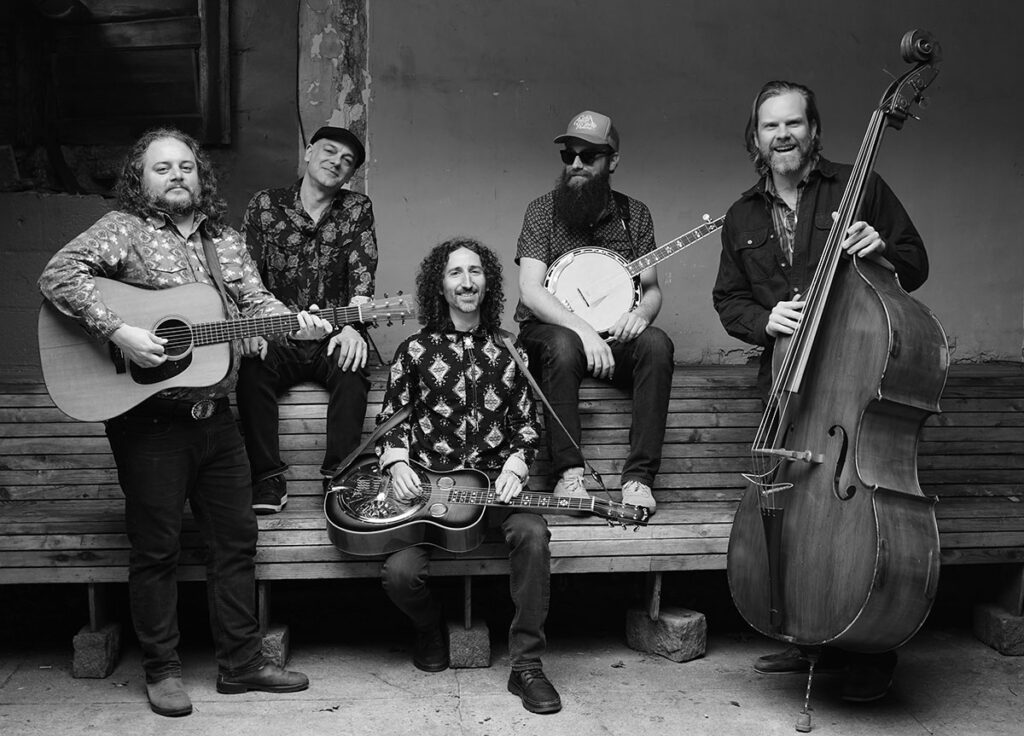
His Brooklyn-based bluegrass band Cole Quest and The City Pickers formed in 2017. They released a new album Homegrown in 2025, produced by Steve Rosenthal, who has won four Grammy Awards and been nominated seven times. The album consists of four original songs and covers of songs by Guthrie, John Hartford and Peter Rowan.
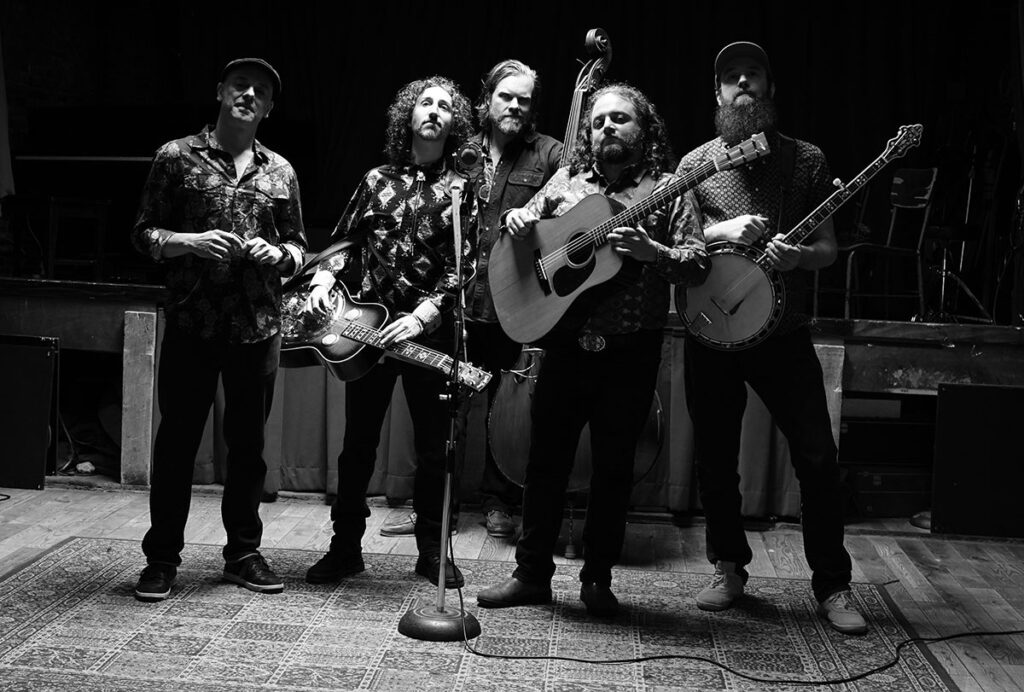
Quest, 39, began playing music at age 10 after his father gifted him an electric guitar. He played in bands from elementary school to his mid-20s, when a Woody Guthrie celebration changed his musical direction.
“In 2012, Woody was 100 years, so my mother decided to put on a series of events and concerts to celebrate, and my sister and I helped,” Quest says. “One of the concerts included the group Old Crow Medicine Show. I started talking with Ketch Secor, the lead singer and fiddle player, about how he got into playing old-time fiddle. He mentioned that he had just bought a cheap one at an antique store and taught himself. For some reason, it clicked with me when he said that. I went home the next day and marched to the local guitar center and bought a mandolin.”
Later that week, Quest explored a Queens, New York, neighborhood he had just moved to and stumbled into an Irish pub, The Quays.
“The bar had a live bluegrass session happening, and they were playing ‘Going Down the Road Feeling Bad,’ which I knew from a Woody recording,” Quest recalls. “I was immediately drawn in by the up-tempo rhythms and technicality of the musicians. The energy and familiarity were unescapable. During the break, the jam leader, Dave McKeon, mentioned that it was an open session: ‘If you have a bluegrass instrument, grab it and come on up!’ I ran home, grabbed my new mandolin and went back to begin the next chapter of my life. I showed up every week for the next five-plus years, learning the mandolin, the dobro, the songbook and the chops. I’ve been fascinated by bluegrass music ever since, and it is probably the largest contributing factor why I have a band at this point.”
Glide Magazine described the music of Cole Quest and The City Pickers as “bluegrass-anchored energy, blues-stirred restlessness and folk-infused introspection.” Quest likes that description.
“I think it gets to the core of our sound and intentions,” he says. “We have a deep appreciation and love for the technicality and energy of bluegrass. We have that driving banjo and flatpicking guitar that gives bluegrass its definition. We’re also greatly influenced by the ideologies of folk music songwriters and traditions such as Pete Seeger, John Prine and, of course, Woody.
“The music we create doesn’t exist in a void,” Quest continues, “but is a result of the context around us. I’d say the relationship to Woody’s music has more ties than I’m probably aware of, which lives alongside the beliefs my parents instilled in me and my own experiences. I’d argue you could find a little bit of Woody’s music in between every word of every song.”
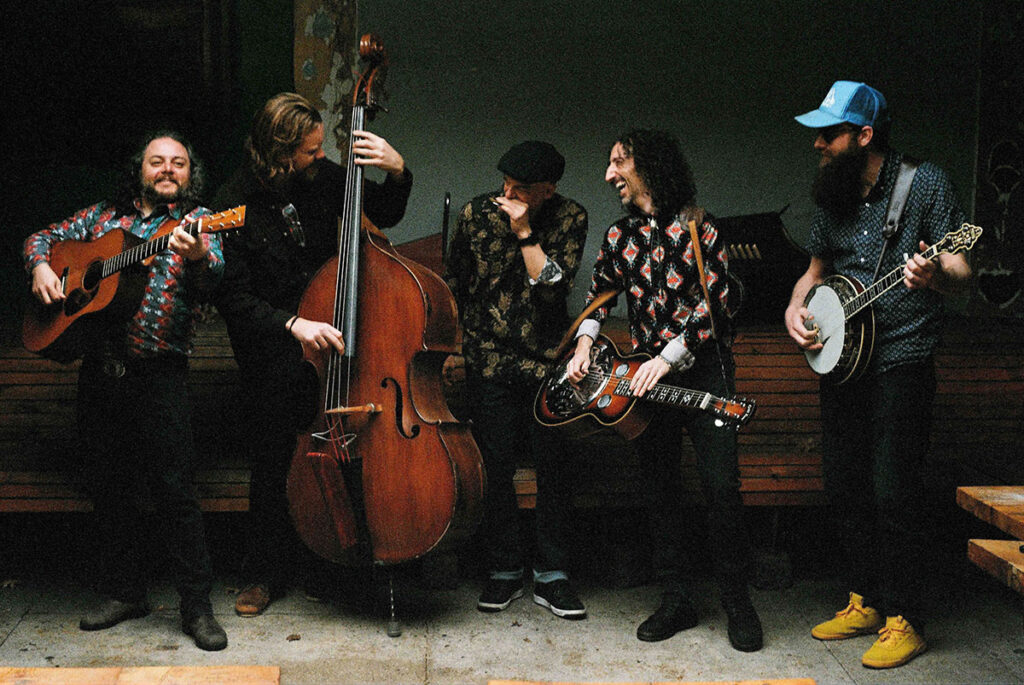
Being the grandson of a musical legend must carry a lot of weight and responsibility. So, I ask Quest whether it ever was a creative and professional burden.
“In short, both,” he replies. “Being the grandson of Woody Guthrie comes with expectations. People may want to hear the second coming or see me play a guitar that has ‘This Machine Kills Fascists’ written on it. On the other hand, the connection certainly opens doors for me and the band that would normally never exist.”
Having access to much of Guthrie’s work “has always been incredibly inspiring,” Quest says. “At home, mom would often have copies of his writings, songbooks or recordings lying around. I can’t tell you the number of times I’ve read a line from a lyric or a book, and inspiration immediately set in, causing me to put it down and start writing.”
Quest maintains that he has never intentionally tried to follow his grandfather’s footsteps or pave his own path.
“I’ve mostly just followed what feels authentic to me,” he says. “In high school and college, I was playing and writing electric rock and experimental music. Over time, I’m not surprised that my journey has led me back to Woody, Arlo (Guthrie, Woody’s son) and the rest of the folks I was surrounded with as a child.”
Quest has traveled many times to Tulsa, Oklahoma, to the Woody Guthrie Center, the museum honoring his grandfather. Steps away on the same street is the Bob Dylan Center, honoring the still-touring songwriter who idolized Guthrie.
I ask Quest for his thoughts about the Woody Guthrie Center and its presentation of the works and life of his grandfather. He attended the grand opening in 2013, when his mother cut the opening ribbon alongside Ramblin’ Jack Elliott and other dignitaries. Quest returns nearly every year to see new exhibits and honor his grandfather.
“It’s a wonderful place, which might seem weird to say for a place that’s taken a whole slew of our family’s belongings, but it’s for good reason,” he says. “Properly caring for and maintaining a collection of more than 3,000 pieces of writing and artwork was a full-time occupation for my mother for many years. It was expensive and, ultimately, limiting for those who were interested in learning about Woody directly from the materials. The Woody Guthrie Center has opened the door to educating all sorts of folks who would normally not have direct access, including schools and other community-based programming.”
Last August, a new CD and vinyl record, Woody at Home, Vol, 1 & 2, was released. It contained 22 previously unreleased tracks recorded at Guthrie’s home, including 13 songs that were never before released.
I ask Quest to name the best song his grandfather wrote.
“I think the best song is the one that fits each person in the right moment for them,” Quest says. “There is no single greatest, because each of us are in a different place in our lives looking at the world from a different perspective. Life is always evolving, and Woody’s songs are there to act as a constant guidepost or a thought on pretty much any given topic. If I’m feeling angry or frustrated about the greed all around me, the best song might be ‘All You Fascists.’ If I’m feeling romantic, maybe ‘She Came Along to Me’ or ‘King of My Love.’ Hungry? ‘Honeyky Hanukah.’ Downtrodden? ‘I’m Gonna Get Through This World.’ Looking for a mechanic? ‘Cheap Mike.’ You get the idea, and the list goes on and on.”
Quest says he loves so many artists’ albums, so he can’t choose the best one he has listened to.
“I’m inspired by the songwriting on albums like Hotter Than July by Stevie Wonder, John Prine’s self-titled album and Point by Cornelius,” he says. “I’m hyped on the passion and energy in Rage Against the Machine’s self-titled album and The Shape of Punk to Come by Refused. I also love the sweet sounds of Aja by Steely Dan and the melodic and lyrical poetry of albums such as Kind of Blue by Miles Davis and Midnight Marauders by A Tribe Called Quest. Of course, some good old flatpicking on Doc Watson’s self-titled album should be on the list, too. There’s more, a lot more.”
Rage Against the Machine was “probably” the best concert Quest attended.
“They were my favorite band growing up, and then they broke up,” he explains. “I hadn’t seen them live, but they did a reunion show in 2007, and I made sure I was there. I loved that they stood for something more than just sounding awesome. They’re active about fighting for a better world. They just do it with hard-rocking solos and incredibly poetic rhymes.”