
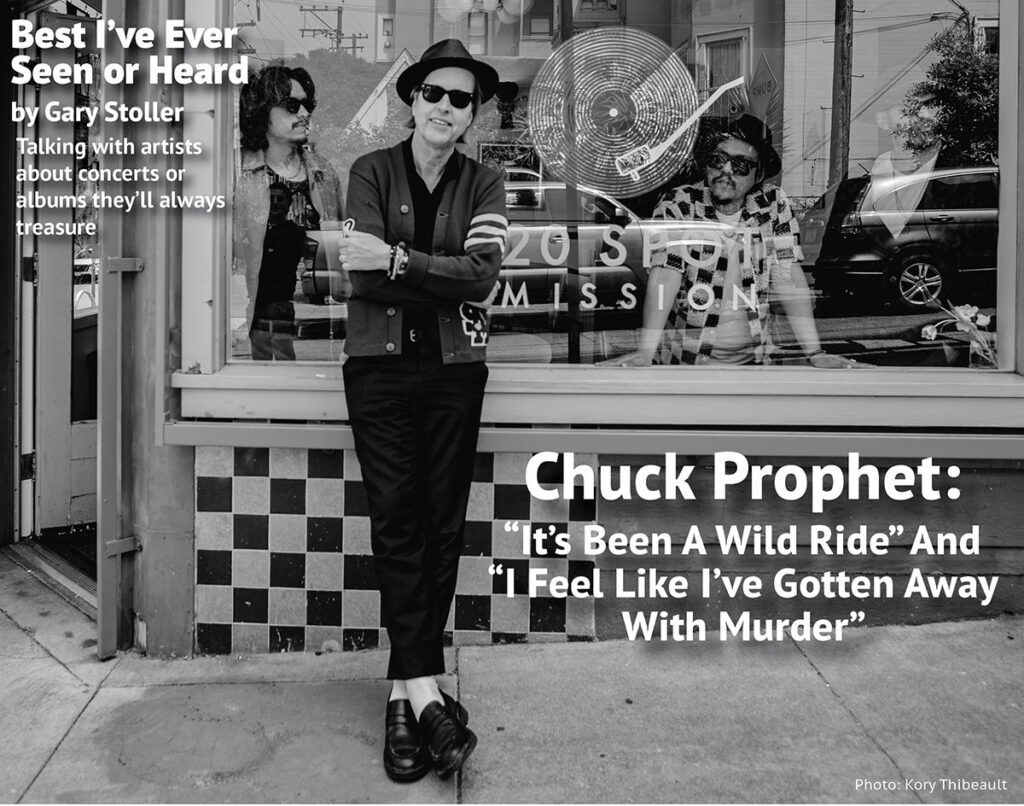
Chuck Prophet seems a bit unsettled when I mention to him he is one of music’s great songwriters and rock and rollers, and I am bothered that he is not on the tip of the tongue with most music fans. I tell him his music belongs in Madison Square Garden or at least New York’s 2,894-seat Beacon Theatre, because it is such a hard-charging, exciting, literate brand of rock and roll.
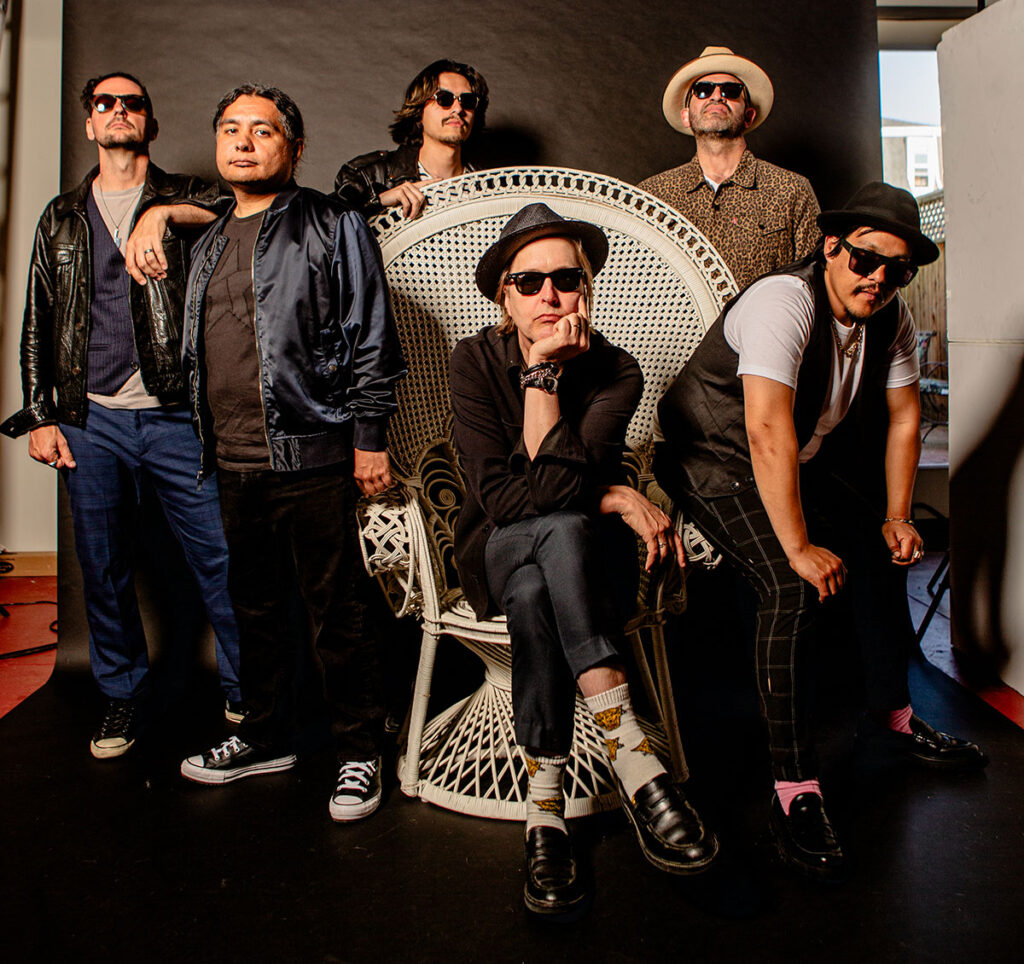
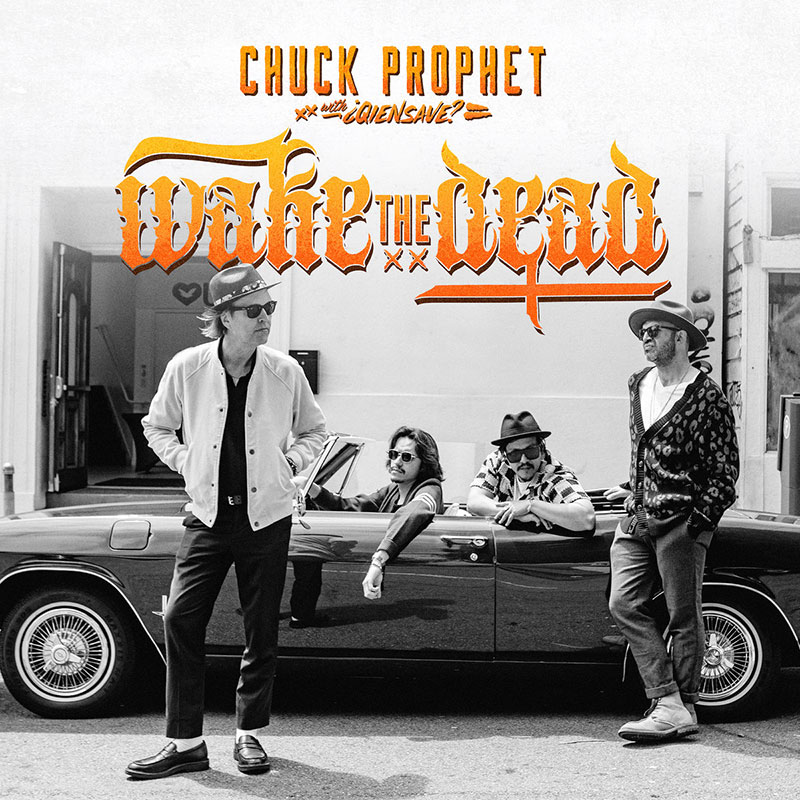
“In many ways, I feel like I’ve gotten away with murder,” says Prophet, whose most recent album Wake the Dead teamed cumbia group Qiensave with his band the Mission Express. “I’ve worked with my heroes. I’ve played all over the world. I found an audience over time that stuck with me — some of them from the beginning, some of them wandered in more recently and decided to stay. For the most part, I’ve managed to avoid the grind of a day job. I’ve rarely had to set an alarm clock. That alone feels like a victory. And still, my answer doesn’t always satisfy people. They don’t quite get it.”
Prophet cites Stephen King’s book On Writing.
“He talks about the buzz — that jolt when something jumps off the page and surprises even him,” Prophet says. “The thrill of it. The addiction to chasing that feeling. I thought he really articulated something that had eluded me. I can’t imagine he’s writing for the money at this point, as I’m certainly not doing this for the money.”
It’s nonsensical for performing musicians to gauge success on the size of the audience or the number of zeros on their financial statements, he says.
“I do it, because it thrills me,” Prophet explains. “Because sometimes I can still write a song that stands up for itself and demands to be heard. And because I’ve so often taken this ride with my best friend, Stephanie Finch — my wife, my co-conspirator, my partner in whatever this circus is. So much of it has been a shared experience. Of course, it’s hardly been all rainbows and unicorns. But it’s been a wild ride. How do you put a price on that? It’s all been great. Even when it sucks.”
Prophet recalls the words of his friend Greg Leisz, whose name may not be universal among music fans. He is an incredible pedal steel player and guitarist who has added so much color to the music of Jackson Browne, Mark Knopfler, Joni Mitchell and many other big names.
“Greg Leisz was producing my record for a lot less than his normal day rate,” Prophet recalls, “and he once said to me: ‘The money? You just spend that. The experience? That goes in the bank. If you think of it that way, I’ve done pretty well for myself.”
Is Wake the Dead a departure from other albums in his catalog or a natural progression? I ask Prophet.
“Back in the day, I read an interview with Chris Stein from Blondie,” he answers. “Someone asked about their detours into disco and ska and what we used to call rap. And, he said, ‘What do you want us to do — keep rewriting the same girl-group songs?’ That stuck with me. At some point you have to ask yourself: ‘Where can I take this stuff?’ Everybody wants to go somewhere. The trick is finding something that gets you excited. For me, that was cumbia.”
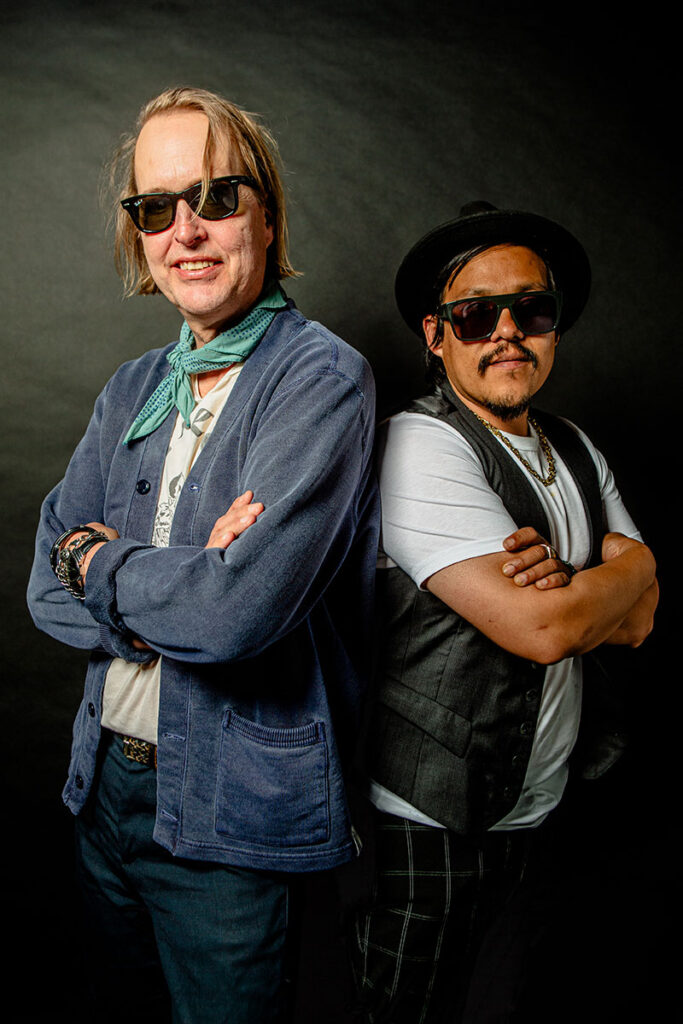
Photo: Kory Thibeault
Cumbia “is a popular genre of music that originated in Colombia and has since spread throughout Latin America and beyond,” according to the San Francisco Conservatory of Dance. “It is characterized by its infectious rhythms, catchy melodies and lively dance beats. Cumbia music is often associated with celebrations, parties and festivals and is known for its ability to get people up and dancing.”
Prophet explains how he became enamored with cumbia.
The coronavirus pandemic afforded him downtime, so there was “time to listen — really listen — as opposed to working on material for a new record or relearning my own songs and preparing to head out on the road,” he says. “I kept hearing this cumbia music in the bars around San Francisco, especially at The Make-Out Room where me and my band have played a lot over the years. I also hear cumbia spilling out of taquerias in the Mission District where I live. It caught my ear.”
Then Prophet crossed paths with musicians from Salinas — “from farming country, three hours south of San Francisco, but it might as well be another planet,” Prophet says. “John Steinbeck country. I followed this band around, asked questions, went to shows. Eventually, one in the band said, ‘Chuck, we’ve got a house in the woods. Bring your amp. You can turn up as loud as you want.’ I said, ‘I’ll be there.’ That was Qiensave. We ended up going on an adventure together.”
They initially played “a few ramshackle gigs together — high-wire stuff,” Prophet says. “We played a hippie festival with lawn chairs and blankets in Big Sur. We played and, within minutes, people were on their feet, dancing. And I remember thinking, ‘Yea, I want more of this.’”
In 2017, this columnist witnessed another high-energy Prophet show at The Iron Horse in Northampton, Massachusetts. Prophet and the Mission Express were touring with the Bottle Rockets, and Prophet’s blistering rock and roll tore the roof off.
“We had a pretty cool thing going with the Bottle Rockets out of St. Louis,” Prophet recalls. “It wasn’t cooked up by some industry handshake. It was mutual admiration all the way. Somewhere along the line, I may have suggested we try a double bill. Those things can be delicate — usually one band’s doing the heavy lifting at the box office. But I had this feeling it could be a two-plus-two-equals-five situation. And it was!”
Every show, the Mission Express was in the crowd watching the Bottle Rockets, taking notes.
“And those guys were just as generous with us,” Prophet says. “It was a great time. That show at the Iron Horse may have been the last one. I think we’ve got a group photo of us outside the club, smiling like idiots on our final night together.”
Researching this column, this columnist was surprised to learn that Prophet played with Warren Zevon, another wild rock and roller who is one of my favorite songwriters and musicians.
“Zevon is a hero, for sure, and I played on a record entitled Life’ll Kill Ya,” Prophet says. “As much as Zevon is a literary artist, he’s also rock ’n’ roll to the marrow. He can take something simple and sneak a complicated truth inside it. There’s that quote often attributed to Charles Bukowski about how a poet makes the complicated simple, while an intellectual makes the simple complicated. I might be mangling it. But, yeah, Zevon was a poet in my mind.”
It was not “a cakewalk” working with Zevon on the album, which was released in 2000.
“I’d worked before with producers Paul Q. Kolderie and Sean Slade, and I was part of the band assembled,” Prophet says. “My role ended up being pretty minimal. Warren could get cranky, especially when the Mountain Dew ran dry. Like clockwork, halfway through the session, he’d get a migraine. Every morning, he’d arrive with a grocery bag bulging with 6-packs of the stuff. I always wondered if he ever connected the dots — migraines and Mountain Dew.
“Still, he was sharp. — scary sharp,” Prophet recalls. “Sometimes, he’d wander over to the piano and work up a vocal arrangement or something out of thin air. You’d see the gears turning — his intelligence. It was impressive. In the end, I called it the best-paid internship I ever had. Probably ever will.”
While Zevon was touring in the 1980s after releasing his first four outstanding albums, Prophet met another rock and roll legend, Alex Chilton. They met at Atlanta’s 688 Club in 1986, when a 22-year-old Prophet was in the band Green on Red, and Chilton, the blue-eyed soul singer from Memphis, was the opening act. Chilton had been the lead singer of the 1960s band the Box Tops, which released hit songs “The Letter” and “Cry Like a Baby,” and then he went on to become a rock and roll cult figure in Big Star.
“Chilton pulled up the gravel drive to the back of the club in an old Buick Skylark, spitting plumes of blue smoke,” Prophet vividly recalls. “Alex took off his shirt, shoving it into the back of his Fender Super Reverb amp, and pulled out the one he wore for gigs. He threw a harmonica rack over his head, tuned up his guitar to the harp, all the while looking at his bass player and drummer (Rene Coman and Doug Garrison). He stepped up to the mic and clicked his heels four times. That was it. I don’t know who my little psyche’s influences were at the time: Neil Young, Joe Strummer, David Bowie, Tom Verlaine? They all went out the window at that moment; floated up into the ether and stayed put.
“Alex has remained,” Prophet adds. “I have forgotten many heroes along the way, but Alex has stayed right there. That night I stood about 10 feet from Alex’s Fender Super Reverb amp and heard ‘September Gurls’ for the first time. For real. First time I heard that descending cluster of chords — that chimey intro was coming right out of his fingers. Put on ‘Bangkok’ or ‘Sister Lovers’ or ‘Radio City,’ and you’ll begin to understand why this man, this rock and roll song and dance man, can’t be tossed aside. Ever.”
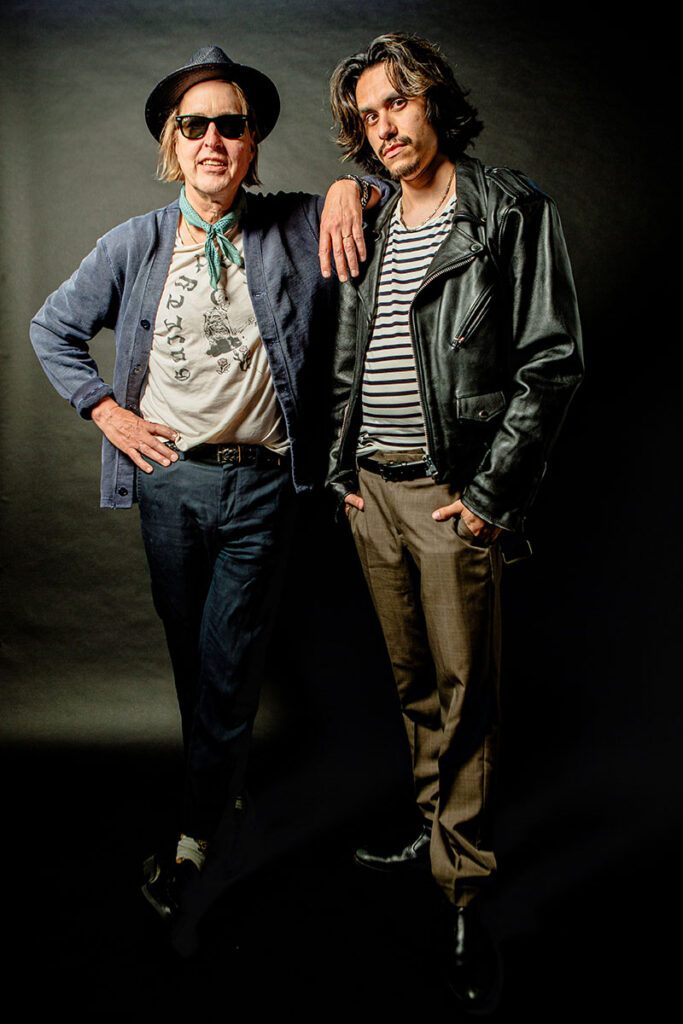
Photo: Kory Thibeault
I mention another top rock and roller, Bob Dylan, who also is adored by many musicians, and ask Prophet how Dylan influenced him. Dylan celebrated his 85th birthday last month and continues to tour on his so-called Never Ending Tour, which has been underway for about 38 years.
“It’s hard to even measure Bob Dylan’s influence on me,” Prophet answers. “At this point, it’s in the bloodstream. It’s DNA. And it’s not just the size of what he’s done — a staggering body of work. The outtakes alone are enough to lay most artists to waste. It’s the seemingly ease at which he does it. And the way he’s distilled the American canon of music. There’s no one else. All roads lead to Dylan.”
During the 1980s and early 1990s, Prophet was mostly on a musical road with Green on Red, a band that formed in Tucson, Arizona, before moving to Los Angeles.
“When we were out there in the mid-80s with Green on Red, doing whatever it was we were doing, there weren’t a whole lot of fellow travelers,” Prophet says. “I didn’t see a stampede of bands chasing those sounds. We were trying to make our own version of a Creedence Clearwater Revival record — swampy, haunted, American in a way — that didn’t fit the neon ’80s dress code. Later on, you’d see groups like The Georgia Satellites come along and just nail it. They opened for us, and I remember thinking, ‘Yeah, they’ve got the memo.’ But back then, it felt like we were operating without a net, or maybe without a map.”
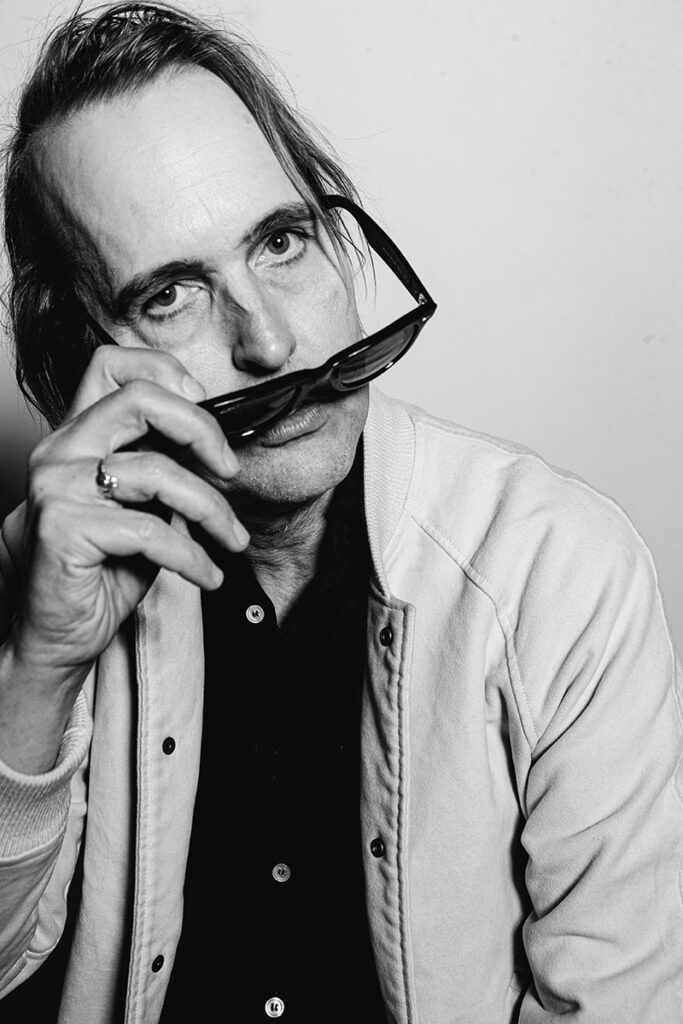
The members of Green on Red were the group’s worst enemies, Prophet says.
“There’s a thing that happens in bands: You spend years fighting the world, fighting to be heard, scraping for every inch,” he explains. “Then, when you finally get a little traction, all that fight — if you’re not careful — turns inward. You start wrestling each other instead of the darkness outside the club. That describes us, at least part of the time. But like war buddies, like army buddies, there’s something forged in that. You go through the trenches together. You can’t un-know that. There’s still a lot of affection there — even if we bristle a little when one of those emails pops up in the inbox.”
Green on Red released 10 albums during 1982-1992, and Prophet was in the band for all the albums except the first two. The band released one live album during that period, Live at the Town & Country, a club in London.
I ask Prophet which live show he attended as a spectator most impressed him.
“The Flamin’ Groovies at the Temple Beautiful (in San Francisco) showed what was possible — how much of the canon of rock and roll still remained relevant when they were doing it,” he says. “That inspired me.”
Prophet, however, cites another concert as the one that influenced him most as a musician.
“The Rubinoos showed, once again, that what you could do with two guitars, bass and drums was limitless,” he says. “They were truly exceptional. In some ways, they were like the Beach Boys meets the Jackson 5. They were often labeled power pop, but that’s a bit of a disservice. They were more than that. It wasn’t all just inspired by the Who or anyone else. They brought in doo-wop, a cappella traditions and a real sense of how songs were put together.”