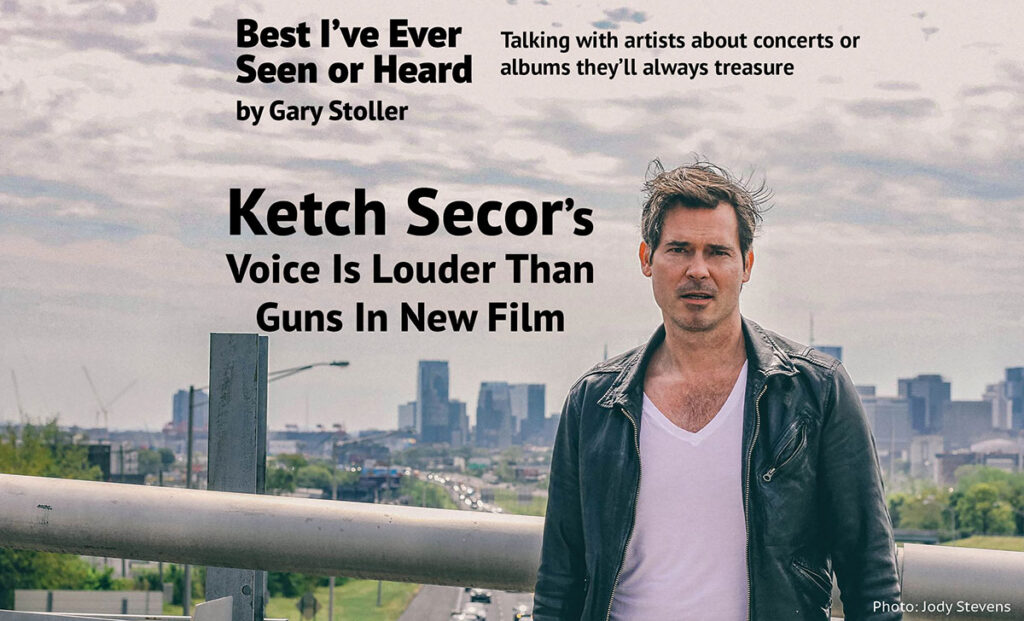
Ketch Secor and I share a deep love for the music of Bob Dylan, and we share something else that we’d rather not share.
At Denver’s Paramount Theatre in 2017, Secor and his Old Crow Medicine Show band mesmerized my son Ben and me with an incredible concert saluting the 50th anniversary of Dylan’s classic Blonde on Blonde album. The band played the entire double album in its entirety, put its own creative, exciting stamp on each song and were joined for the encore, “You Ain’t Goin’ Nowhere,” by Colorado governor John Hickenlooper on banjo and vocals. Old Crow Medicine Show also played “Wagon Wheel,” which was written by Secor and Dylan and is the group’s most well-known song.
Five years before in Colorado, two journalists — my daughter Kristin and I — stood in Aurora, a Denver suburb, and sadly observed the makeshift memorials outside a movie theater where a gunman killed 12 people and injured 70 others. We were in Aurora for a family wedding the next day and sought to visualize the tragic setting we had viewed on TV before traveling to Colorado. Driving away from that tragic scene, I mentioned to Kristin how lucky we were to live in peaceful Newtown, Connecticut, where such a tragic scenario wouldn’t happen. How wrong I was! Five months later, a 20-year-old gunman killed his mother and massacred 20 children and six adults at Newtown’s Sandy Hook School. Working for USA Today, I believe I was the first national journalist on the tragic scene — formerly a happy place where I had coached youth baseball and basketball teams.
In 2023, Nashville-based Secor recorded Old Crow Medicine Show’s “Louder Than Guns” single one week after a mass shooting in the Tennessee city killed six students and teachers at The Covenant School.
Louder than guns, more powerful than bullets flying
Is the voice rising up saying it’s about time
To put the last nail in the coffin
Put the last body in the ground
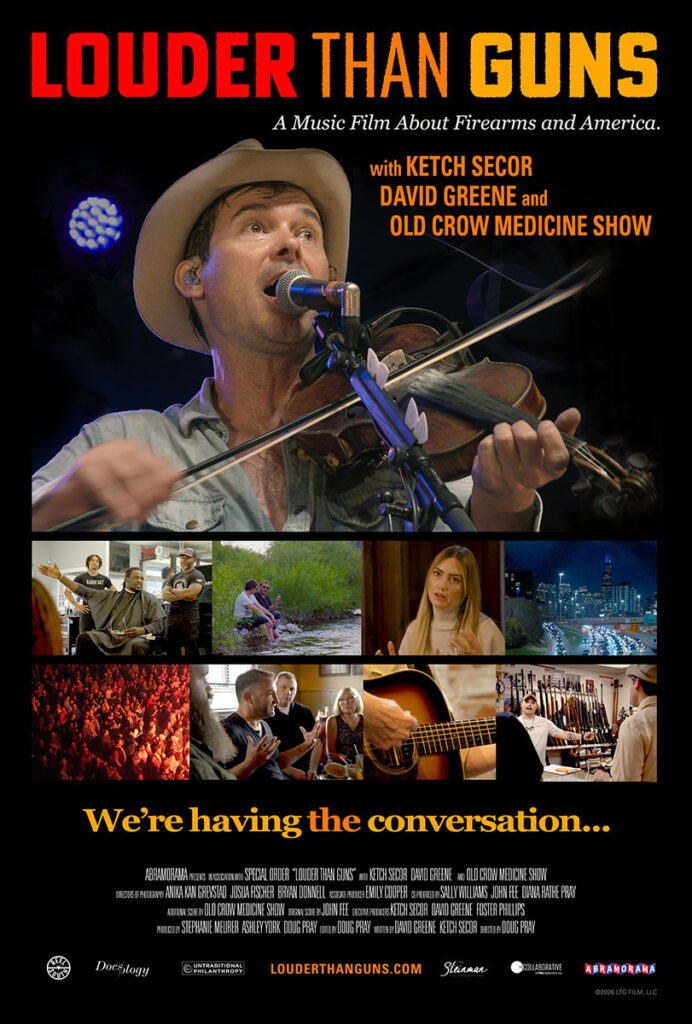
Secor is now distributing a related 89-minute documentary Louder Than Guns that he wrote with former NPR reporter David Greene. The film presents various views about firearms, which, according to the American Academy of Pediatrics, kill, on average, 13 children and teens per day in America. The documentary includes concert footage of Old Crow Medicine Show on tour and presents discussions with locals about gun rights and gun violence. It aims to find common ground among citizens with diverse firearms viewpoints and reaches no conclusions about actions that should be taken to prevent gun-related shootings.
I mention to Secor that my life was forever changed by the horror and grief of the Sandy Hook shootings and then reporting on the tragedy in my hometown for more than 18 subsequent months. Of course, nothing I went through, though, comes close to the pain and loss suffered by parents, relatives and friends of the children and educators who were killed. Those parents, relatives and friends became incredible role models and guiding lights for the entire city and have led the way to search for solutions to prevent gun violence.
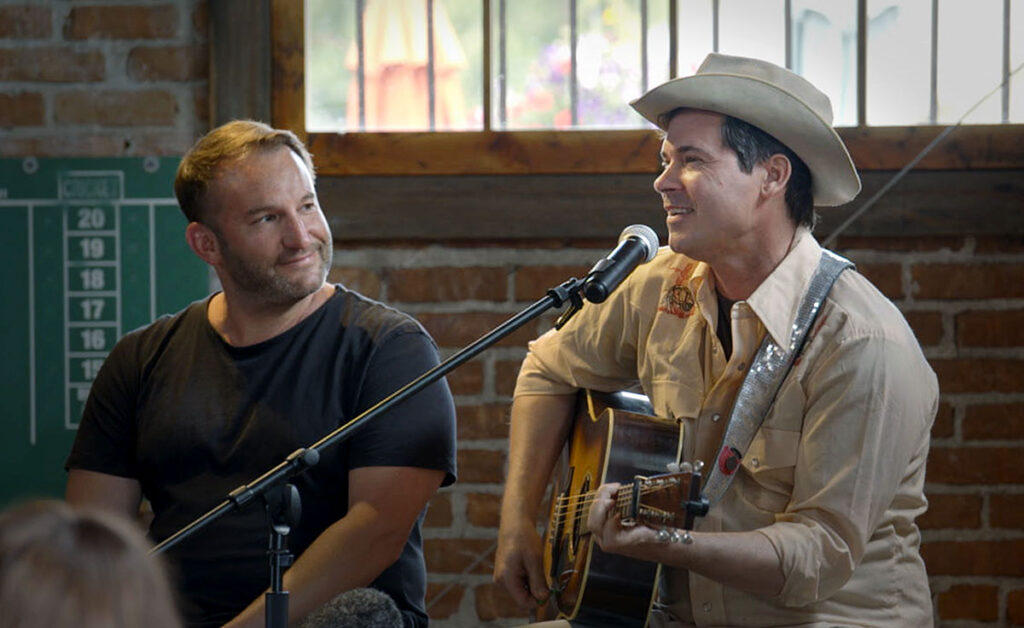
David Greene and Ketch Secor in Missoula, Montana
I ask Secor how the Sandy Hook shootings affected his outlook on firearms.
“I’m so terribly sorry for the pain and trauma that Newtown, Sandy Hook — really all of Connecticut — has had to endure since the tragic events occurred,” he responds. “It’s one of the more shocking school shootings we’ve been forced to witness as Americans, and I know a lot of people who have been directly affected, especially the Barden family. Like a lot of people, I think the shootings at Sandy Hook elementary caused me to jump to the conclusion that such horrors would be enough to illicit a bipartisan national response from our elected officials. And, like many people, I sunk into considerable feelings of hopelessness when it appeared that no meaningful legislation followed.”
Secor visited gun stores in his Louder Than Guns documentary and was told that sales skyrocketed during the week after the Sandy Hook massacre. That was “a grim reminder that there is an undeniable relationship between gun sales, Second Amendment enthusiasts and ongoing episodes of rampage violence,” he says.
So, I ask him what new ground is paved in his new film.
“With all the frustration I have felt as a parent and community activist, I’ve really been searching for a way to find my own place in all this — a place where at least I know what my intentions are and where the buck stops,” he answers. “Because I have little faith in our elected leaders, who, in the quarter century since Columbine (the Colorado high school where 13 students and a teacher were killed in gun violence in 1999) have largely remained hamstrung to act, I’m very interested in what communities, families and regular people can do to have a voice in the wake of increasing violence affecting all strata of society.
“My film offers a kind of blueprint for what one person can do when they feel enough is enough,” Secor continues. “It follows a general premise that we have to look people in the eye, listen to each other and share in the grief of these times, where bullets are the No. 1 killer of our youth. Public spaces that once felt serene — the pool, the roller rink, the movie theater — are now danger zones, as is our most precious community asset: our schools.”
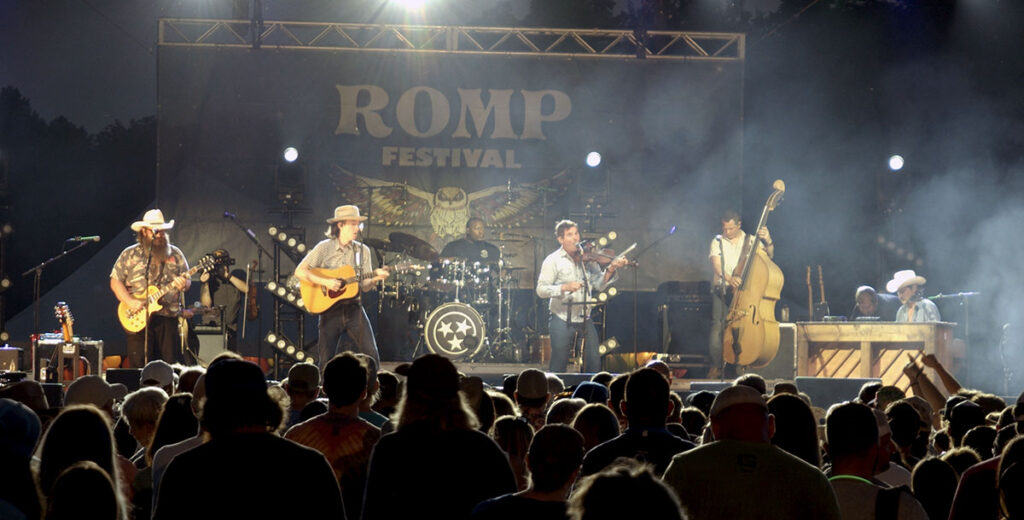
Old Crow Medicine Show, Owensboro, Kentucky
What are the solutions for America? I ask Secor.
“The film does not offer specific solutions or endorse a particular bill or piece of legislation,” he responds. “Rather, it promotes the idea that gun violence and its cruel realities belong to each of us, and each of us has a unique role to play in seeking a solution. Sitting down with law enforcement professionals, teachers, pastors, marksmen, gunsmiths, veterans, tribal elders, trauma surgeons and a host of others, discussing the ubiquity of guns and the ubiquity of violence from them, feels kind of like step one, when other options fail.
“It may not yield a quick legislative solution, but what it does offer is a kind of spiritual lift,” Secor adds. “I think it’s important to note that the gun violence epidemic is not only a public safety issue. It is also a spiritual problem. How can we be a people of faith in good conscience, if we fail to protect the most vulnerable people in our society? I’ve wrestled with this question, and, in turning to the great spirit above, I feel that inaction is a straight-up sin. If there is a god in heaven, then, surely, we are being tested for our strength, our bond and our convictions.”
One month before Secor released the Louder Than Guns documentary, Old Crow Medicine Show released a new album entitled Union Made. Secor says it’s a tribute to America.
“This record is our love song to the U.S. of A. during her exciting semiquincentennial birthday bash,” he explains. “It’s made up of songs that express not just why we love America, but how we love her. Some of the music is patriotic, and some is protest. But all of it fits, just like all Americans somehow see ourselves stitched into those stars and stripes.”
Many music fans are stitched into America through their love of the Grateful Dead, a band that played the best concert Secor says he attended.
“Seeing the Grateful Dead that last year before Jerry Garcia died sure was a lucky hand to hold,” he recalls. “His musicianship, his presence and voice are all-in-all unparalleled on this planet.”
Which are the best albums Secor has ever listened to?
“I love so much music!” he responds enthusiastically. “I love the Ink Spots, Tommy Dorsey, the Pretenders, Dylan, the Dead, the Talking Heads, Public Enemy and so many more. Music is a balm for the soul. It cures what ails you. But it can’t stop a bullet, protect an unarmed motorist at a traffic stop or keep your kids safe at the library, the mall or a sleepover. So, I turn to music as a release, but much work remains with or without the joy of song.”