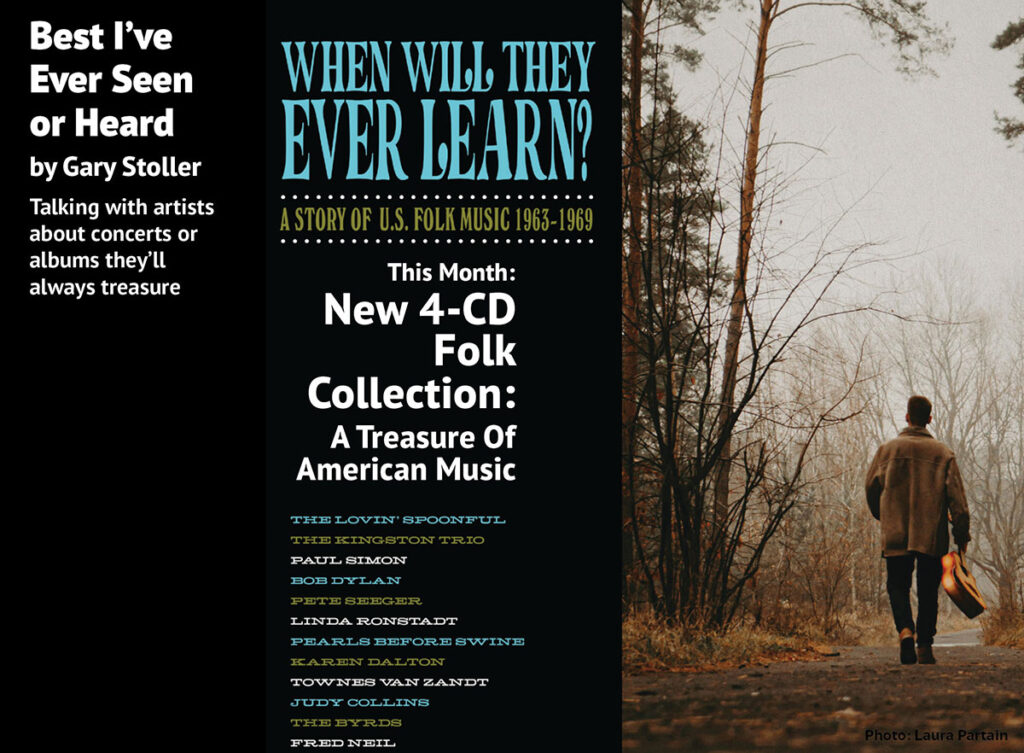
The Kingston Trio’s No. 1 hit “Tom Dooley” was as significant as “Heartbreak Hotel” and “I Wanna Hold Your Hand” for its effect on American music.
“I read that in the notes for a Kingston Trio box set The Capitol Years and thought, ‘I can believe that,’ so I borrowed the line,” says British music writer and author Mick Houghton, who compiled and wrote the notes for When Will They Ever Learn? A Story of U.S. Folk Music 1963-1969, a new 100-song four-CD collection on Cherry Red Records. “Folk music is American music, and American music is folk music.”
Many folk collections have been released through the years, but When Will They Ever Learn? stands out as a unique treasure. The songs were carefully selected by Houghton, who wrote a Sandy Denny biography I’ve Always Kept a Unicorn and Becoming Elektra, the story of pioneering label Elektra Records and its founder Jac Holzman. Among other projects, Houghton also compiled the 5-CD Forever Changing, a 117-track box set featuring Elektra artists that is one of popular music’s best and most eclectic box sets.
With so many excellent American folk songs that have been recorded, I ask Houghton how he decided to choose the 100 songs on When Will They Ever Learn? He says the compilation tells a well-rounded story or sets out to tell the American folk music story differently with a sense of continuity and scope.
“I’ve highlighted so many connections that reflect the camaraderie of the scene,” Houghton explains. “I also wanted to include artists who often aren’t featured: Bonnie Dobson, Hedy West, Malvina Reynolds, Len Chandler, Peter La Farge, Paul Clayton, Stefan Grossman, among many. I’ve included a lot of forgotten anti-war songs and was pleased to include Simon & Garfunkel’s version of Ed McCurdy’s club singalong ‘Last Night I Had the Strangest Dream.’ The Big 3’s ‘Come Away Melinda’ has a wondrous vocal by Cass Elliott, and the Byrds’ ‘I Come and Stand at Every Door’ might well be McGunn’s best ever vocal. It’s so chilling. I also wanted to raise a few eyebrows by including H.P Lovecraft, Porter Wagoner and Dolly Parton, even Cher, who might seem out of place to some. And Anne Murray makes Eric Andersen’s ‘Thirsty Boots’ sound like a Carpenters’ song and shares a disc with the more freaky Holy Modal Rounders, Pearls Before Swine and the Insect Trust.”
What does American folk music mean to a veteran London-bred journalist?
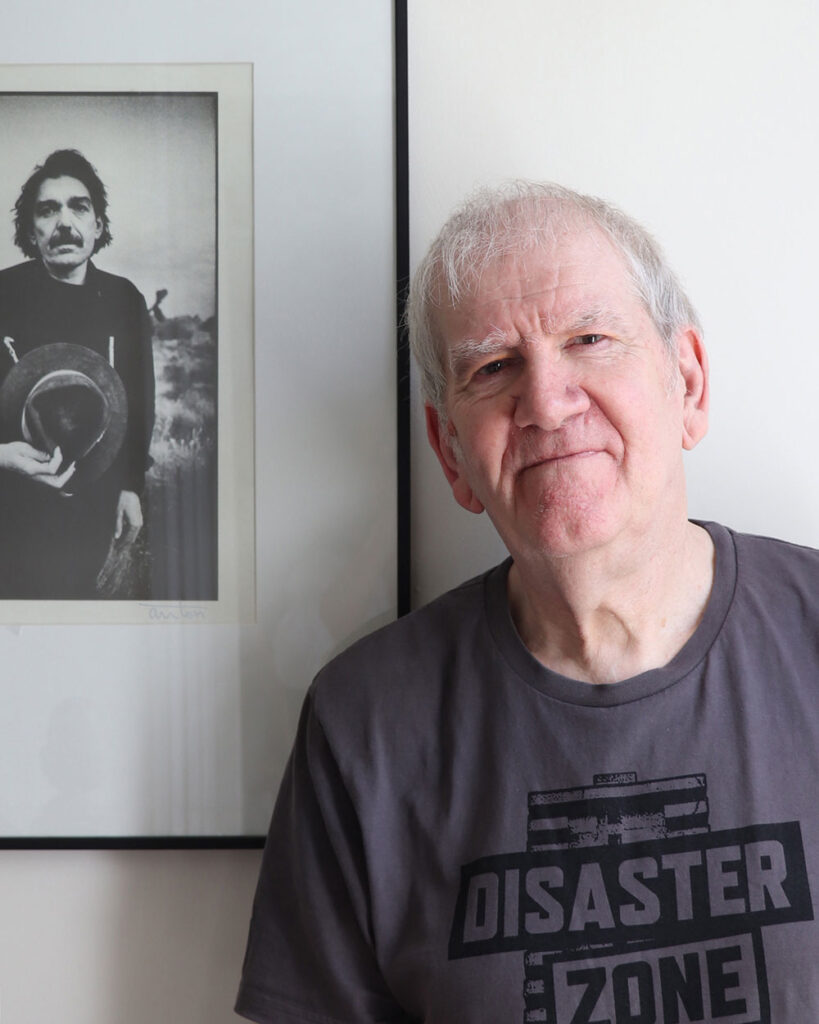
“I might have a Willie Nelson phase, or Elvis, or the Beatles, or Talking Heads, or Ray Charles, or Neil Young, or the Searchers, or Julian Cope, or Bert and John, or Bill Callaghan or…who knows?” Houghton responds. “But I always come back to American folk music. It never lets me down, and I always find something new or something fresh and unexpected in something that I’ve been listening to all my life.”
Houghton does an informative short write-up for every song on When Will They Ever Learn? Here’s his write-up about Peter La Farge’s song “Ira Hayes.”
“Peter La Farge was a descendant of the Narragansett Indians, who aggressively defended the rights of oppressed native Americans. One of folk’s first ‘angry young men,’ he won five battle stars in the Korean War where he suffered a serious head injury. ‘The Ballad Of Ira Hayes’ denounced the plight of an Indian World War II hero left destitute after the war. Johnny Cash successfully recorded the song in 1964 and five others by LaFarge for American Indian themed Bitter Tears. LaFarge was signed to Columbia by John Hammond just before Dylan, but made only one album; he recorded five more for Folkways before his death in 1965.”
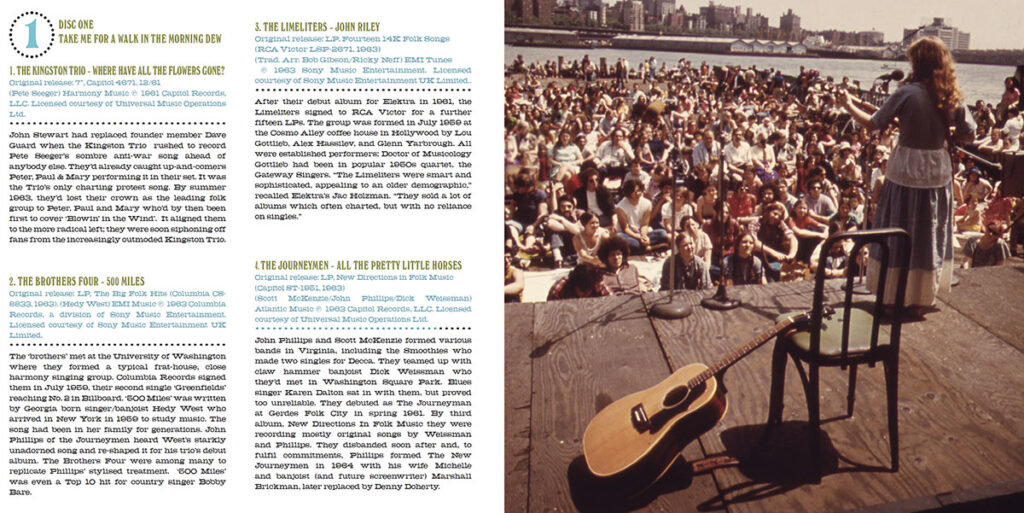
When Will They Ever Learn? is loaded with many of Houghton’s personal favorites. He aimed to include one song per artist; the only exception is Fred Neil, who has two, plus a duo song with Vince Martin.
“I also tried to avoid the obvious selections much of the time, but, as somebody told me years ago, you need some of the familiar foundation stones to stabilize any compilation.” Houghton says. “I hope it’s a good mix.”
Houghton says he “was hampered,” because the rights to songs on the Vanguard and Smithsonian labels couldn’t be obtained.
“But I tried to get all the key artists in somehow or have some kind of presence as part of the story,” he explains. “So, we have Phil Ochs’ belated recording of ‘There But For Fortune,’ which Joan Baez had a U.K. hit with, plus a lovely quote from when I spoke to her about Ochs. There are a couple of songs by Sylvia Fricker of Ian & Sylvia. In fact, Ian & Sylvia’s ‘The French Girl’ is one of my favorite songs, and I chose Gene Clark’s little-known cover of it. There are also covers of songs by Richard Farina, Eric Andersen and Buffy Sainte-Marie to fill in other gaps.”
A few songs missing from the compilation bother Houghton.
“There’s nothing from Michael Hurley’s Folkways album or Barbara Dane with the Chambers Brothers,” he says. “I minded less that we couldn’t get Peter Paul and Mary, Leonard Cohen and Joni Mitchell, and I really wanted Jefferson Airplane’s ‘Embryonic Journey,’ but you can’t always get what you want.”
Greenwich Village, of course, played a major role in the lives and careers of many of the musicians included in the compilation.
“I’d guess at least half of the musicians had really strong ties to Greenwich Village,” Houghton says. “But just about everybody must have gravitated there at some point — before or after they’d made a breakthrough — whether they blew in from Minnesota, Aspen, Colorado, Cambridge, L.A., San Francisco, Houston or wherever.”
Houghton has seen countless performances during his long music-writing career, so I ask him if one stands out as the best. He responds that he will “cheat” and mention a best year of concerts. It was 1968, and he attended many at either Royal Festival Hall or Queen Elizabeth Hall, both located on London’s South Bank.
“It’s an extraordinary array of artists, all now truly legendary figures,” he says. “In no particular order, I saw Al Stewart; the Incredible String Band supported by Tim Buckley; Pentangle; Fairport Convention with Sandy Denny having just replaced Judy Dyble on a bill that included Joni Mitchell and Jackson C. Frank; John and Beverley Martyn, and Fairport again, unveiling Liege & Leif. Nick Drake opened for the last two — before Five Leaves Left was released.”
Drake, who died at age 26 in 1974, released three albums and became an acclaimed folk singer-songwriter and cult figure after his death. Many Americans first heard his music when his song “Pink Moon” was played in a 1999 Volkswagen commercial, but few saw him perform live.
“I can only be honest here; Nick Drake made no real impression,” Houghton says. “Only in hindsight do I think he looked uncomfortable on stage, and I seem to recall that the audience response was polite and reserved.”
Besides folk musicians in 1968, Houghton saw the Byrds “in the game-changing, short-lived lineup with Gram Parsons and Doug Dillard at Middle Earth in Covent Garden and the Doors and Jefferson Airplane at the Roundhouse.” And then, in June, “Pink Floyd played the first free Hyde Park concert. Roy Harper came on first but was probably only heard by a few hundred of the 15,000 people who attended the Pink Floyd show. Looking back, I almost have to pinch myself. It was some year, and it indelibly launched an awareness of British and American folk music.”
Who was the best American folk artist? He chooses an early idol of Stephen Stills and other musicians.
“It might well have been Fred Neil,” Houghton says, “and his version of the traditional song ‘The Water is Wide’ may be the best vocal performance ever recorded.”
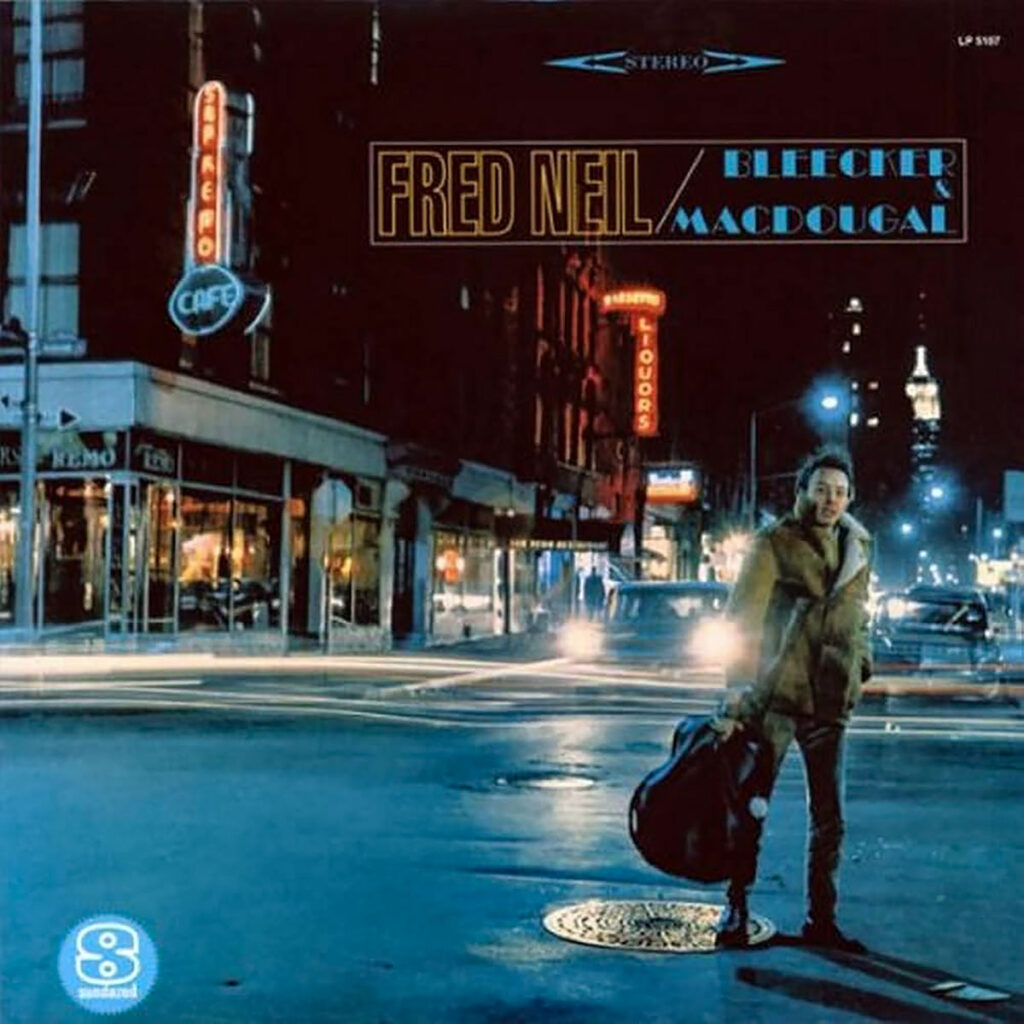
Houghton’s four other favorites “today” are the Holy Modal Rounders, Tim Hardin, Doc Watson and Bob Gibson. The choices might be different on another day, he adds.
I ask Houghton if he had an overall mindset heading into compiling When Will They Ever Learn? A Story of U.S. Folk Music 1963-1969 or a central goal for listeners.
“I see the way folk music evolved during the ’60s as being an organic process,” he answers. “It just happened. Folk rock, for example, wasn’t some kind of seismic shift, and, in hindsight, you could see it coming in some shape or form. It was such a creative and feverish environment, and change was always in the air. I also wanted to end the compilation in 1969, because that marked the beginning of the end of the transition from the folk singer to the singer-songwriter. The line between country and folk was also becoming more defined. There seemed to be a choice as to which camp the likes of Kris Kristofferson, John Prine or Steve Goodman felt most comfortable with — or which category the critics decided was the best fit.”